骨骼并非静止不变的硬块,而是一个持续 "拆旧建新" 的活体组织。对骨骼健康而言,运动的作用常常被低估:它不仅能锻炼肌肉、增强心肺,更能在刺激之下让骨骼变得更致密、更坚韧。规律运动就像给骨骼 "充电",是延缓骨量流失、预防骨质疏松最经济有效的手段之一。
Bones are not static, unchanging structures, but living tissue that continuously "breaks down and rebuilds". When it comes to bone health, the role of exercise is often underestimated: it not only trains muscles and strengthens the heart and lungs, but also makes bones denser and tougher under stimulation. Regular exercise acts like "charging" the bones, and is one of the most economical and effective ways to slow bone loss and prevent osteoporosis.
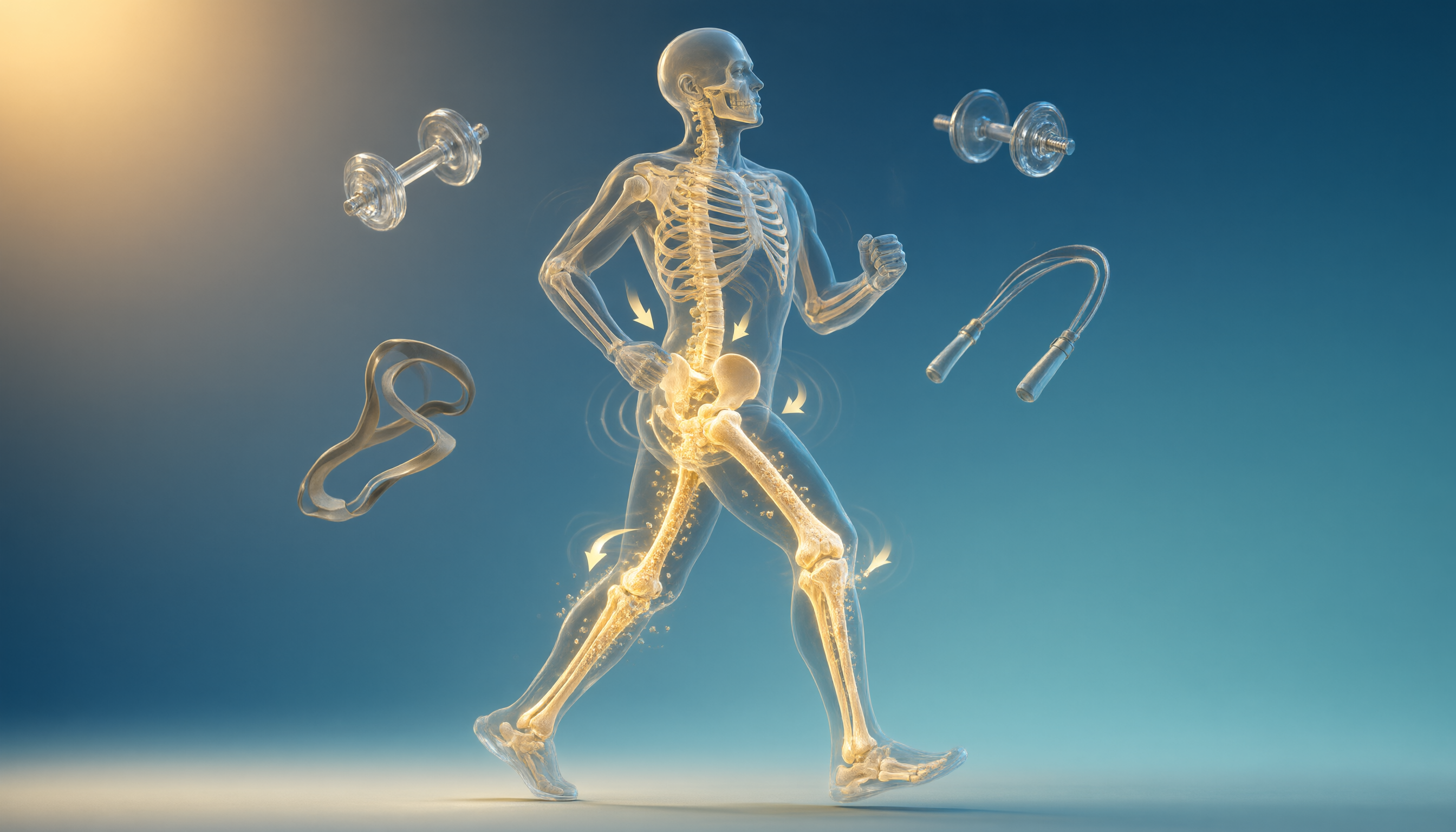
在众多运动类型中,对骨骼最 "友好" 的是负重运动。所谓负重,就是让骨骼承受自身体重或额外阻力的运动,如快走、慢跑、登山、爬楼梯、跳绳等。当骨骼承受一定压力时,会通过力学刺激促使成骨细胞活跃,加速新骨生成,从而提升骨密度。长期坚持负重运动的人,骨骼往往比久坐不动者更加结实强健。
Among various exercise types, the most "bone-friendly" are weight-bearing exercises. Weight-bearing means movements in which bones bear the body's own weight or additional resistance, such as brisk walking, jogging, hiking, climbing stairs and jumping rope. When bones bear a certain amount of pressure, mechanical stimulation activates bone-forming cells, accelerating new bone formation and thereby increasing bone density. People who persist in weight-bearing exercise over the long term tend to have stronger, tougher bones than those who remain sedentary.
除了负重,抗阻训练同样不可或缺。通过哑铃、弹力带、健身器械等施加阻力,可以针对性锻炼肌肉,而肌肉的收缩与牵拉会反过来给予骨骼强大的刺激,促进骨量沉积。尤其是针对腰背、髋部和大腿等部位的力量训练,对维持中老年人骨骼强度、改善平衡能力、预防跌倒都大有裨益。二者结合,效果更佳。
Besides weight-bearing exercise, resistance training is equally indispensable. Using dumbbells, resistance bands, gym equipment and the like to apply resistance can target muscle training, and muscle contraction and pulling in turn provide strong stimulation to bones, promoting bone mass deposition. In particular, strength training targeting the lower back, hips and thighs greatly benefits maintaining bone strength, improving balance and preventing falls in middle-aged and elderly people. Combining the two works best.
很多人误以为只有剧烈运动才有效,其实适度即足。世界卫生组织建议成年人每周进行至少 150 分钟的中等强度有氧活动,并辅以每周 2 到 3 次的抗阻与平衡训练。运动贵在坚持,不必追求一次性大汗淋漓,关键在于长期规律。对初学者或骨量已偏低的老年人,应从低强度开始,循序渐进,量力而行。
Many people mistakenly believe that only intense exercise works, but in fact, moderation is enough. The World Health Organization recommends that adults engage in at least 150 minutes of moderate-intensity aerobic activity per week, supplemented by two to three sessions of resistance and balance training weekly. The key to exercise lies in persistence rather than a single drenching session, with long-term regularity being essential. For beginners or elderly people with already low bone mass, one should start at low intensity, progress gradually and act within one's limits.
选择运动也要讲究科学。建议结合有氧负重、力量与柔韧平衡三类内容,并注意动作规范,避免姿势错误造成关节损伤。同时,维生素 D 与钙质的充足摄入能为运动强骨提供 "原料" 保障;反之,过量饮酒、吸烟等不良习惯则会削弱运动带来的益处。运动的强度、频率与类型,最好在医生或专业教练指导下根据个人情况制定方案。
Choosing exercise also requires scientific planning. It is advisable to combine aerobic weight-bearing, strength, and flexibility-balance activities, while paying attention to proper technique to avoid joint injury from incorrect posture. Meanwhile, adequate intake of vitamin D and calcium provides the "raw materials" for strengthening bones through exercise; conversely, bad habits such as excessive drinking and smoking can weaken the benefits of exercise. The intensity, frequency and type of exercise are best planned individually under the guidance of a doctor or professional trainer.
生命在于运动,骨骼更在于运动。坚持科学的负重与抗阻训练,不仅能让我们拥有更强壮的骨骼,还能改善体态、提升平衡、降低跌倒与骨折风险。从今天开始,迈开脚步,让每一次锻炼都成为对骨骼健康的长期投资。
Life lies in movement, and so does bone health. By persisting in scientific weight-bearing and resistance training, we can not only gain stronger bones, but also improve posture, enhance balance and reduce the risk of falls and fractures. Starting today, take the first step, and let every workout become a long-term investment in bone health.