骨密度检测,医学上常称为双能 X 射线吸收测定法(DXA),是目前诊断骨质疏松症的 "金标准"。很多人对它感到陌生甚至害怕,担心辐射、担心费用,其实这是一项安全、无痛、快捷的常规检查。简单来说,它能精准测量骨骼里的矿物含量,告诉你骨骼是否 "结实",从而判断骨质疏松风险和未来骨折概率,为早预防、早治疗提供关键依据。
Bone density testing, medically known as Dual-Energy X-ray Absorptiometry (DXA), is currently the "gold standard" for diagnosing osteoporosis. Many people feel unfamiliar with or even afraid of it, worrying about radiation and cost, but it is actually a safe, painless and quick routine examination. Put simply, it precisely measures the mineral content of your bones, telling you whether they are "strong", so as to assess osteoporosis risk and future fracture probability, providing key evidence for early prevention and treatment.
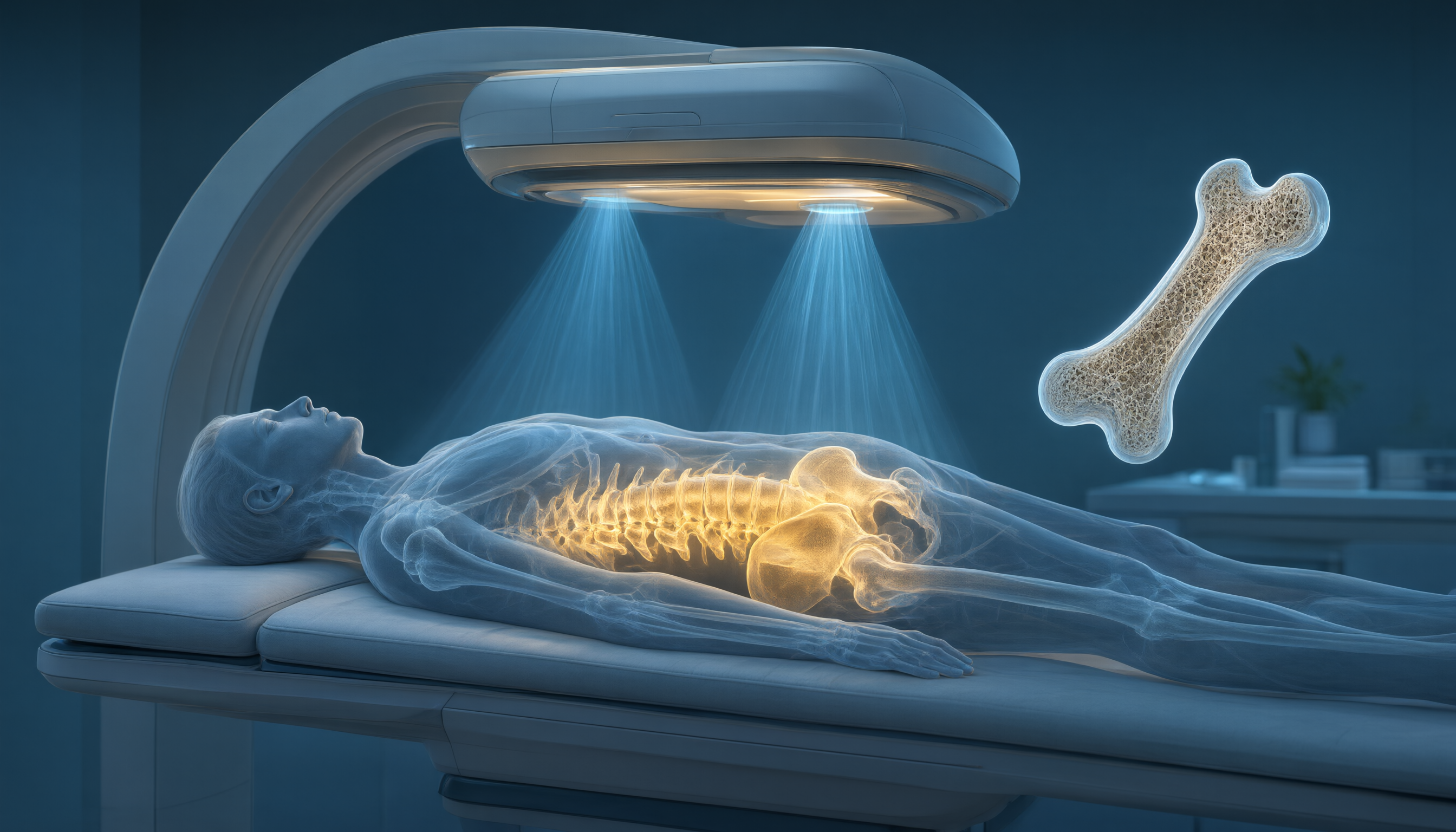
检测过程远比想象中简单。你只需平躺在检测床上,保持静止几分钟,一台仪器会从身体上方缓慢扫过,X 射线以极低剂量穿透骨骼并成像。整个过程不痛、不流血,通常十几分钟即可完成,扫描时你可以正常呼吸,无需特别准备。检测的部位多为腰椎和髋部,这两处是骨质疏松性骨折的高发区域,最具有代表性。
The testing process is far simpler than you might imagine. You simply lie flat on the examination table and remain still for a few minutes, while an instrument slowly scans over your body, with X-rays passing through the bones at an extremely low dose to create images. The whole process is painless and involves no blood, usually completed in about ten to twenty minutes. During the scan you can breathe normally, with no special preparation needed. The lumbar spine and hip are the most common sites examined, as these are high-risk areas for osteoporotic fractures and are most representative.
辐射安全是大家最关心的问题。很多人一听到 "X 射线" 就紧张,实际上一次 DXA 骨密度检测的辐射剂量极低,大约只相当于一次胸部 X 光片的十分之一,甚至比一次跨洋飞行的自然辐射还要少。它的剂量远远低于国家规定的安全标准,对绝大多数人而言风险可以忽略不计,即便多次复查也不必过度担忧,完全可以放心接受检查。
Radiation safety is what worries people most. Many become nervous upon hearing the word "X-ray". In fact, the radiation dose of a single DXA bone density test is extremely low, roughly equivalent to one-tenth of a chest X-ray, and even less than the natural radiation of a transoceanic flight. Its dose is far below national safety standards, and the risk is negligible for the vast majority of people. Even repeated follow-up tests need not cause excessive worry, and you can feel fully at ease about undergoing the examination.
检测结果主要看一个核心指标 ——T 值。T 值是把你的骨密度与同性别、同种族的年轻健康成年人平均值相比较得出的数值。当 T 值大于 - 1,属于骨量正常;T 值介于 - 1 到 - 2.5 之间,提示骨量减少,也就是骨质疏松的 "前奏";而当 T 值小于或等于 - 2.5 时,即可诊断为骨质疏松症。医生会根据 T 值结果,结合你的年龄、症状和生活方式,给出个体化的防治建议。
The test result mainly focuses on one core indicator — the T-score. The T-score is obtained by comparing your bone density with the average of young, healthy adults of the same sex and ethnicity. When the T-score is greater than -1, bone mass is normal; when it falls between -1 and -2.5, it indicates osteopenia, the "prelude" to osteoporosis; when the T-score is less than or equal to -2.5, osteoporosis can be diagnosed. Based on the T-score, combined with your age, symptoms and lifestyle, doctors provide individualized prevention and treatment recommendations.
那么,谁需要做这项检测呢?医学指南通常建议:绝经后的女性,尤其是绝经较早或有骨质疏松家族史者;65 岁以上的男性;长期服用糖皮质激素等影响骨代谢药物的人群;有过脆性骨折史,或患有糖尿病、类风湿等与骨流失相关的慢性疾病患者。此外,如果出现不明原因的持续腰背痛、身高明显变矮或驼背,也应及时安排检测。定期复查间隔一般为 1 到 2 年,具体遵医嘱。
So who needs this test? Medical guidelines usually recommend it for: postmenopausal women, especially those with early menopause or a family history of osteoporosis; men over 65; people taking long-term medications that affect bone metabolism, such as glucocorticoids; those with a history of fragility fractures, or patients with chronic diseases related to bone loss such as diabetes and rheumatoid arthritis. In addition, if unexplained persistent back pain, significant height loss or a hunched back occurs, timely testing should be arranged. Routine follow-up intervals are generally one to two years, and specific advice should follow the doctor's guidance.
读懂骨密度检测,是科学管理骨骼健康的重要一步。它不痛、不贵、辐射极低,却能让我们在骨折发生之前就看清骨骼的真实状态。把它当作一次普通的健康体检,定期检测、尽早干预,骨质疏松便不再是悄然逼近的 "隐形杀手"。
Understanding bone density testing is an important step in scientifically managing bone health. It is painless, affordable and low in radiation, yet it allows us to see the true state of our bones before fractures occur. Treat it like an ordinary health check-up, test regularly and intervene early, and osteoporosis will no longer be a "silent killer" creeping up on us.